Tai Chi for Health
Health Benefits of Tai Chi:
Improved Balance & Coordination
Increased Flexibility & Strength
Stress Reduction & Relaxation
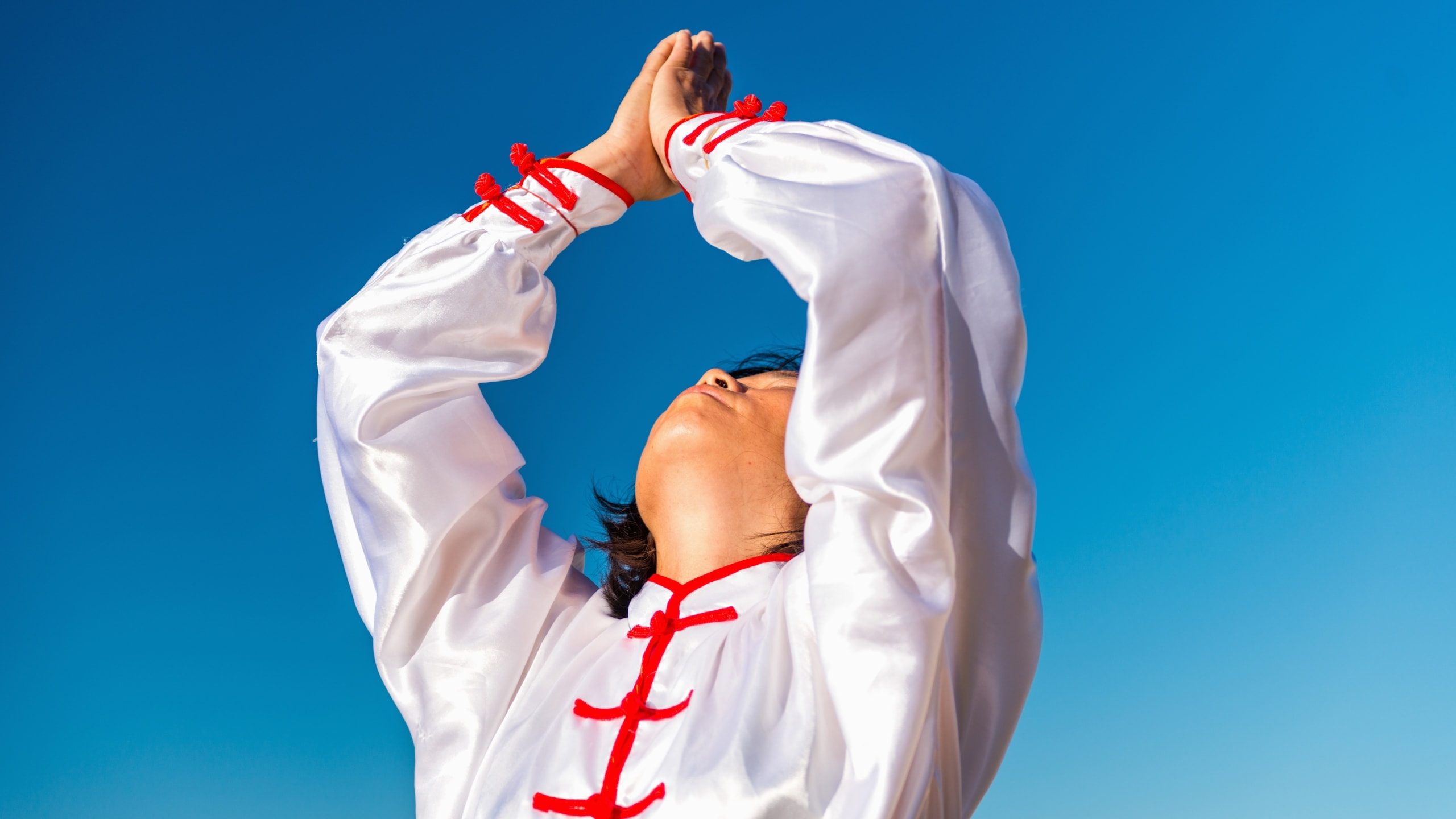
Taiji (pronounced "tie-jee"), also known as Tai Chi, is an ancient Chinese martial art and a mind-body practice that encompasses slow movements, deep breathing, and meditation.
With consistent training Tai Chi is able to naturally subdue and treat many ailments.
We use Tai Chi to enhance ourselves and learn to develop and understand feeling in our bodies and how to integrate that into movement. Practice necessitates and promotes a relaxed and focused mind and emotional state.
There is an emphasis on the meditative energy flow in Tai Chi, which often gets confused with Qigong. Popular culture and meditation trends often overlook the deeper principles behind ancient Arts. To understand this better let’s examine the principle of WuJi within the Tai Chi system.

Standing WuJi - standing with feet shoulder width apart, knees slightly bent, spine straight, and arms relaxed.
It is worth noting that once we remove the martial aspect of Tai Chi, it then becomes Qigong. As noted in a previous article,to optimize the potential of Tai Chi and have a well balanced practice, it is beneficial to keep all of its elements intact: martial arts, internal energy flow, spiritual development and Daoist philosophy.
WuJi is the starting point of Tai Chi practice, representing the state of perfect balance and harmony before any movement or differentiation. It's often described as a state of "emptiness" or "stillness," but not in a negative sense. It's a state of pure potential, ready to manifest into anything.
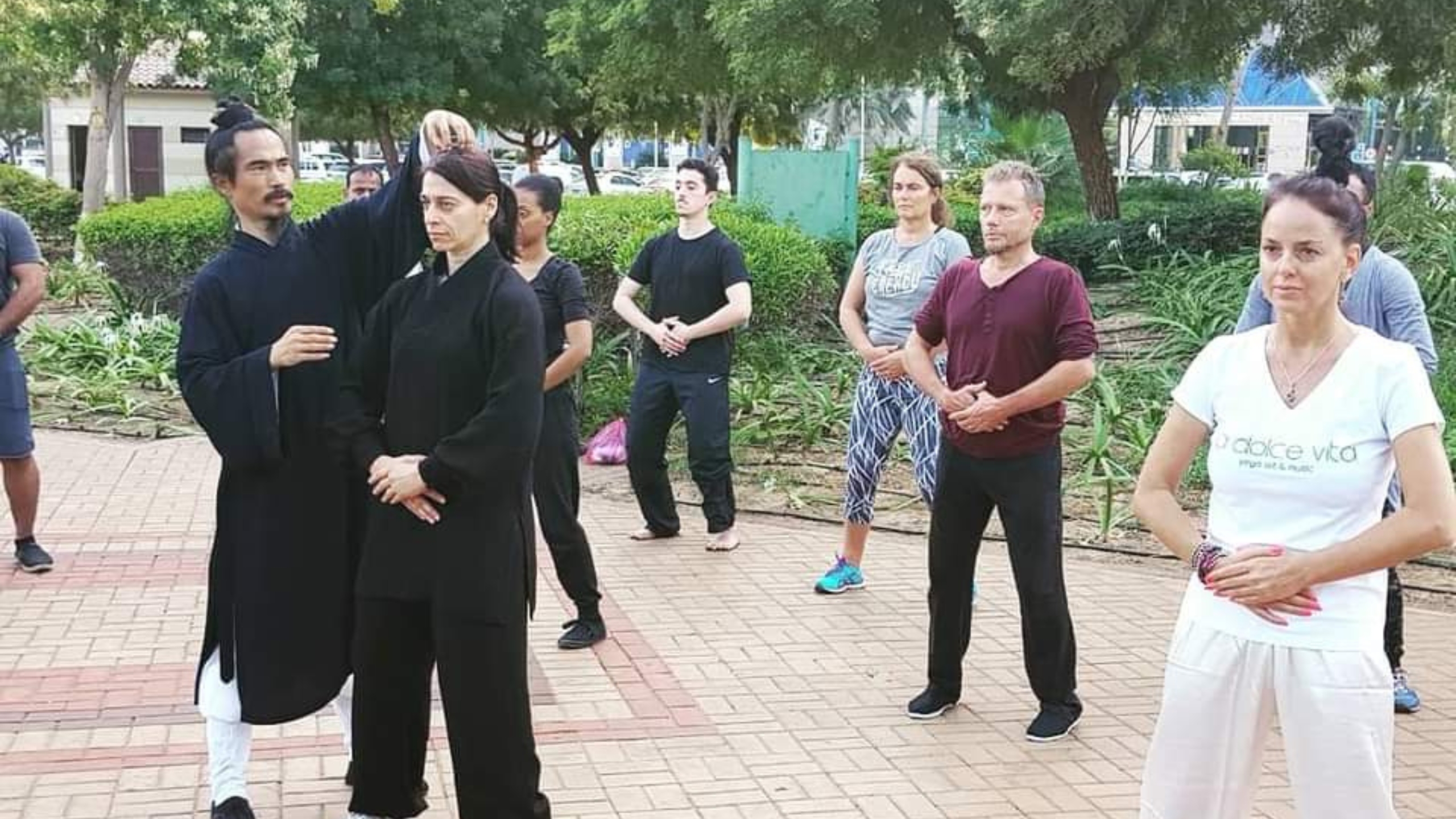
Tai Chi practitioners often begin their practice with WuJi postures, standing in a relaxed and centered stance with a quiet mind. This helps to nurture a sense of stillness, both physically and mentally, and prepares the body and mind for the movement to come.
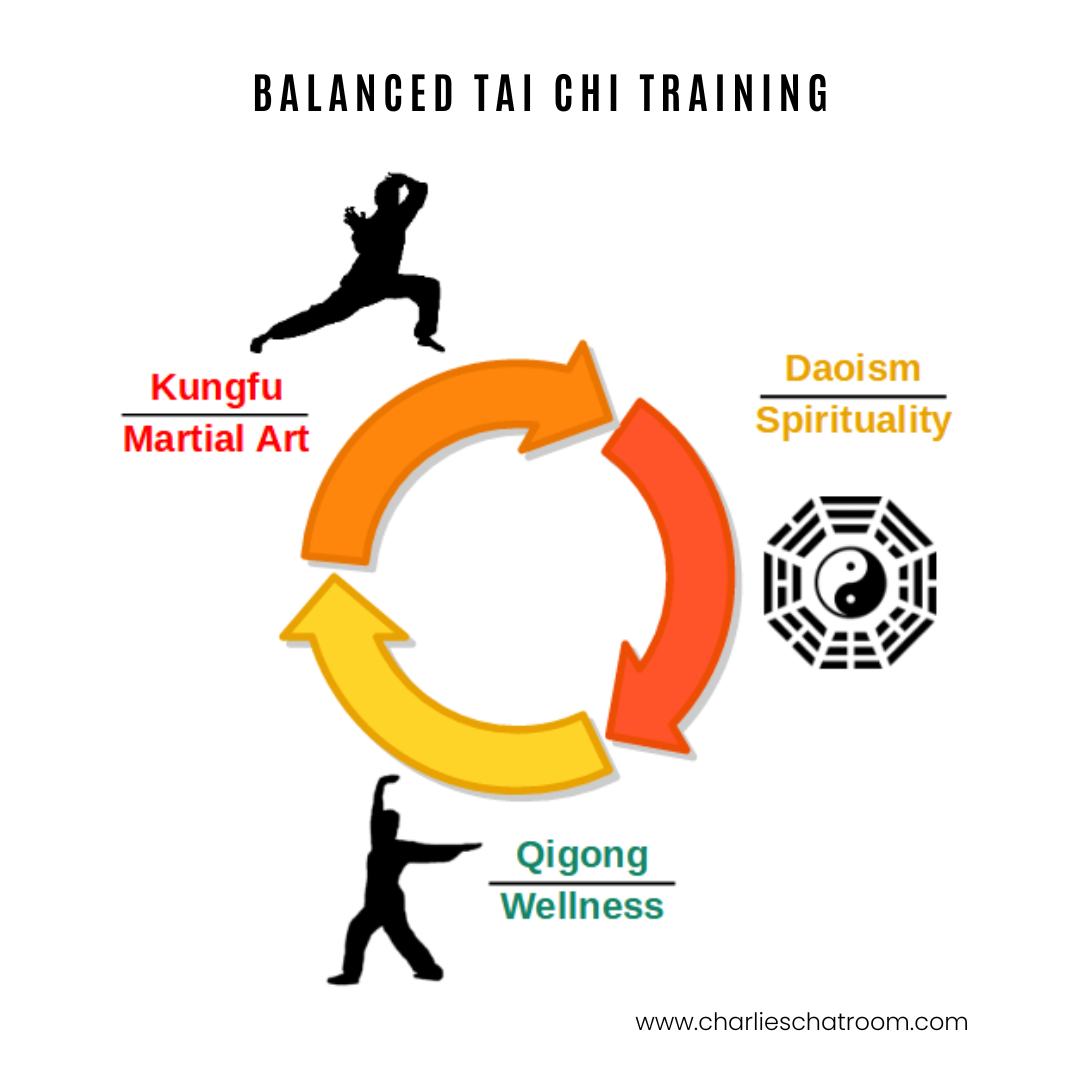
Thus, “Tai Chi For Health” is not Qigong, but zeroes in on "internal power" or "jing," which is generated through relaxed and focused movement. This internal strength is not just physical strength but also a sense of inner calm and balance.
*Disclaimer - This is a short synopsis of Tai Chi and in no way covers the expanse of the greater Taiji Chuan system, different styles and sects, and hundreds of years of the Martial Art’s history. Also be aware that the western interpretation of eastern philosophy and arts can lose certain elements in translation due to cultural and linguistic differences.
Hey, I'm Charlie!
My passion is inspiring individuals to unlock their inner strength. As a podcaster and coach, I get to share practical guidance to empower others on their journey to an impactful life. Charlie’s Chat Room is all about creating a unique blend of motivation and action.